05 / Research Case Study
Bachelor’s Thesis · UX Research
Persuasive Design
Behavioral Psychology
Role
UX Researcher & Designer
Timeline
6 months · 2025
Team
2 Designers (Thesis)
Tools
Figma · Miro · Discord
(Overview)
Pet adoption is widespread, yet many placements fail because adopters enter with limited preparation and mismatched expectations. Research links a substantial portion of failed adoptions to inadequate pre-adoption research and underestimated long-term commitment.
Digital platforms are now the primary entry point — but prior work focused on speeding adoptions, not supporting informed, sustainable ones. This study explores persuasive design as a practical, ethical strategy: nudging adopters to engage with commitment info and pause to reflect, without manipulating emotion. The ethical boundary is critical — techniques must support autonomy, not coerce.
Research Question
Pets enter shelters annually
Return rate within 6 months
Pets abandoned each year
(Research Approach)
A qualitative, user-centered methodology where each participant experienced all three prototypes — letting me directly compare reactions to different levels of persuasion while controlling for individual differences.
6 participants
Recruited with active interest in adopting a dog or cat, across a mix of genders and ages.
Think-aloud + interviews
Individual moderated sessions combining think-aloud testing with semi-structured interviews.
Informed consent
Every participant received an info sheet on purpose, data handling, and their rights.
(The Experiment)
Participants explored three prototypes of the same adoption site, so I could test how persuasive intensity changed motivation, trust, and decision quality.
A
Baseline — the original site
A faithful recreation of the original Battersea.com. The “get a free pack” banner confused users about what the pack was, and “Rehoming” in the nav left people unsure whether it meant adopting or something else.
B
Optimal — subtle, supportive nudges
Clearer wording, a redesigned banner offering a custom pet-match quiz, lifestyle filter cards (“suitable for beginners”), and reassuring success stories — gentle motivation paired with commitment information.
C
Extreme — high-pressure persuasion
Amplified emotional appeals and urgent CTAs — an entry pop-up, pets sorted by “days in shelter,” and a more emotionally-charged story. Deliberately over-tuned to test where persuasion backfires.
The pet browsing page
The same three intensities applied to how people browse pets — from a transactional catalog grid to emotion-led “days in shelter” sorting.
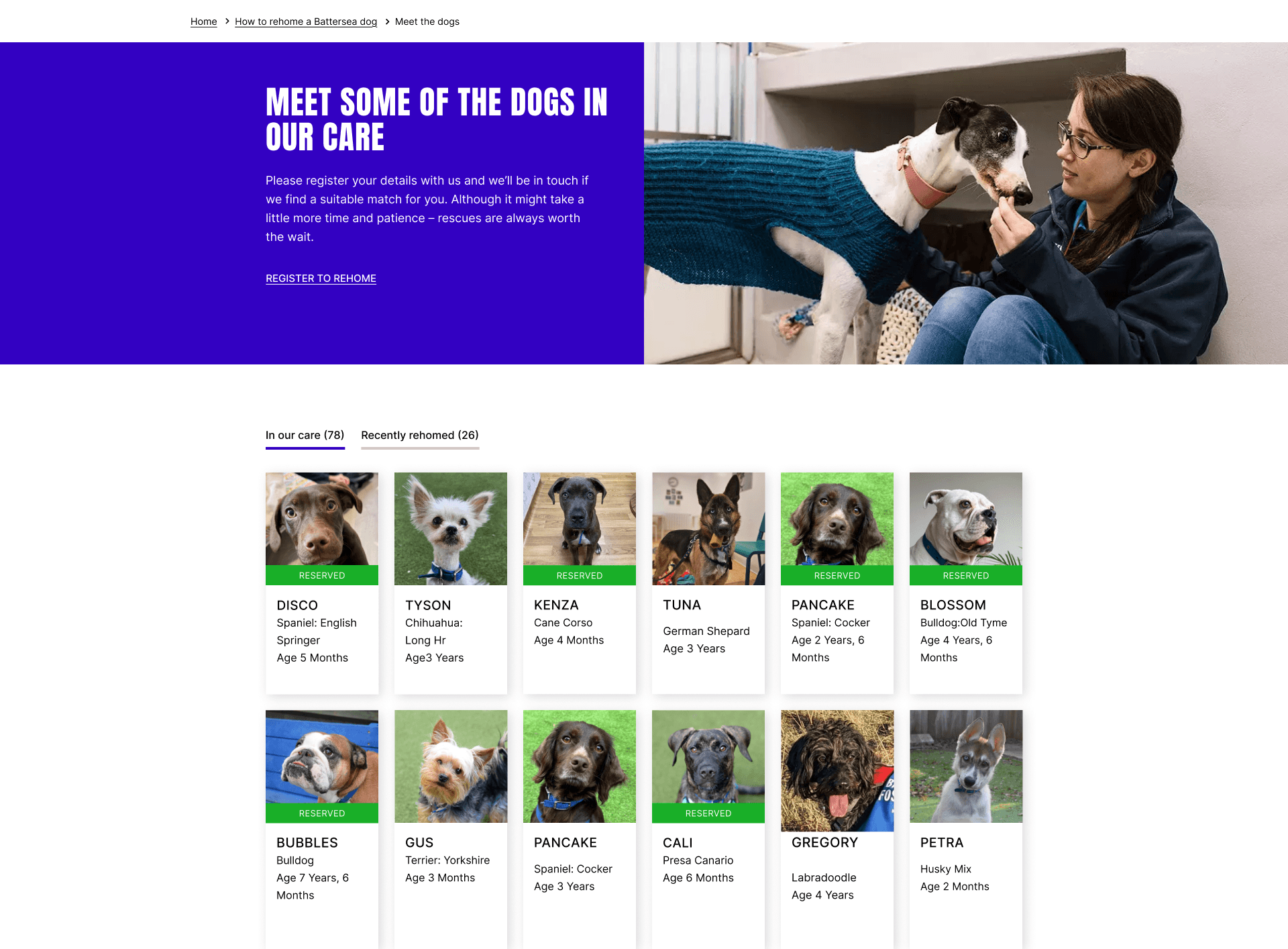
A — Catalog grid
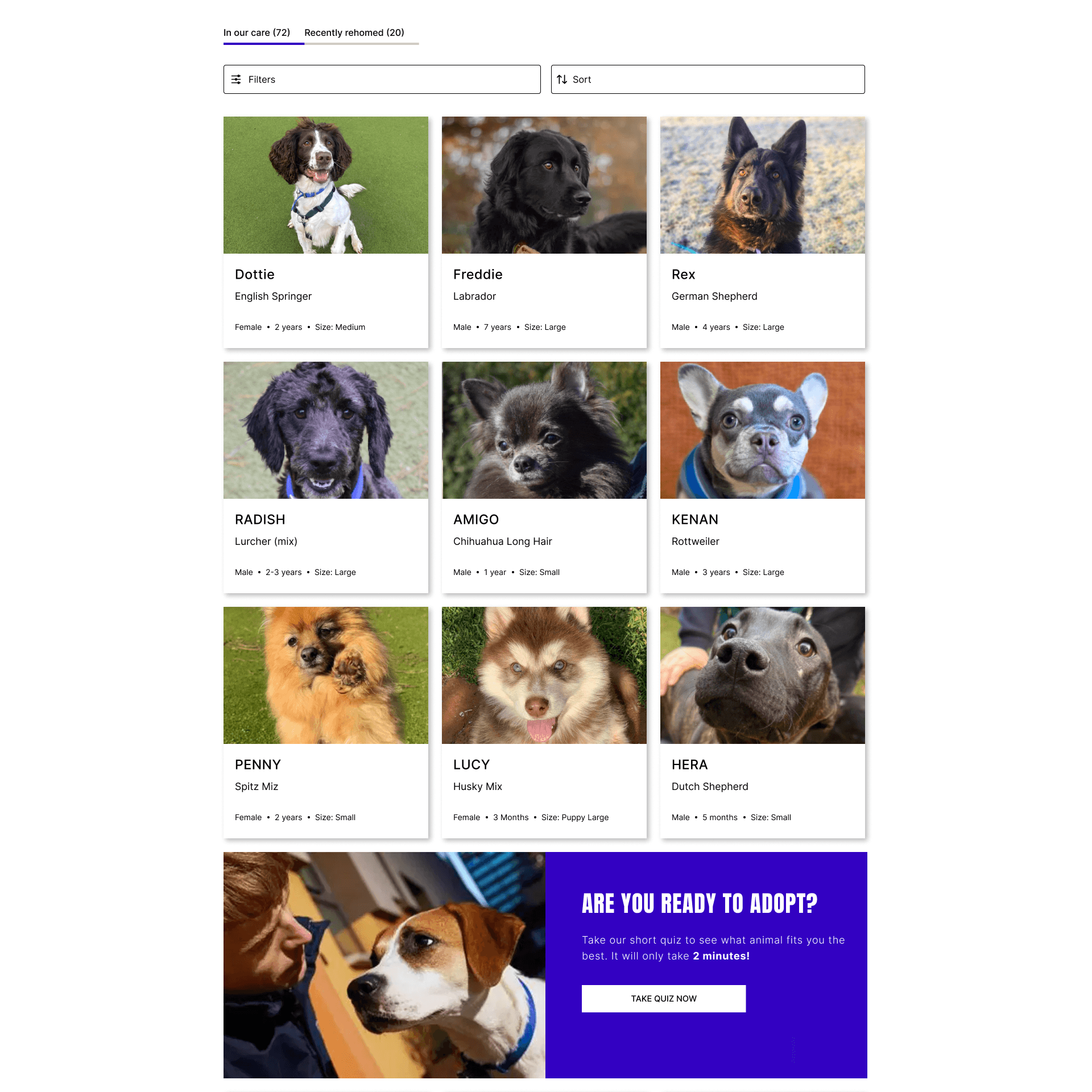
B — Bigger photos, filters
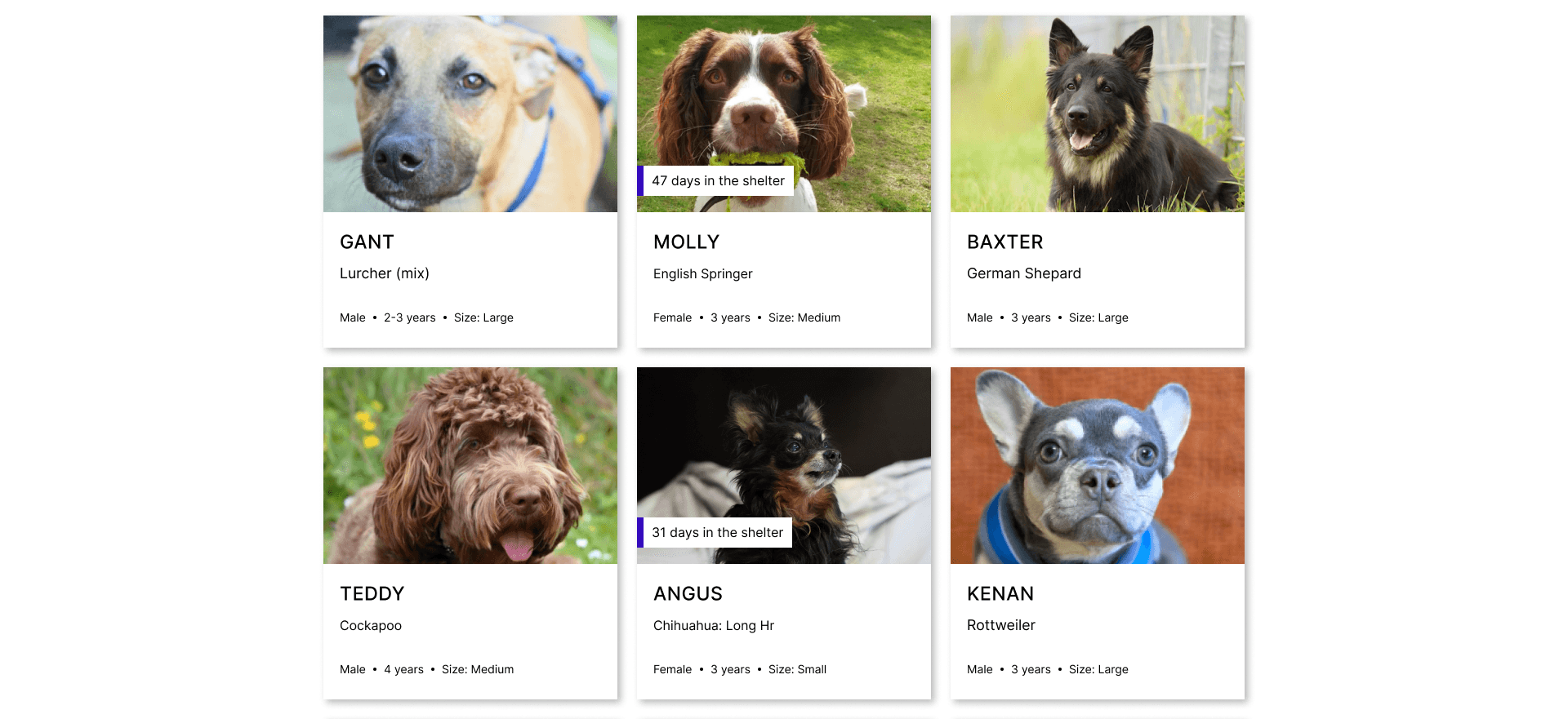
C — Longest in shelter
The pet information page
On the detail page, Design B added an information accordion and a built-in adoption form; Design C pushed a top “adopt” button and a more emotional story.
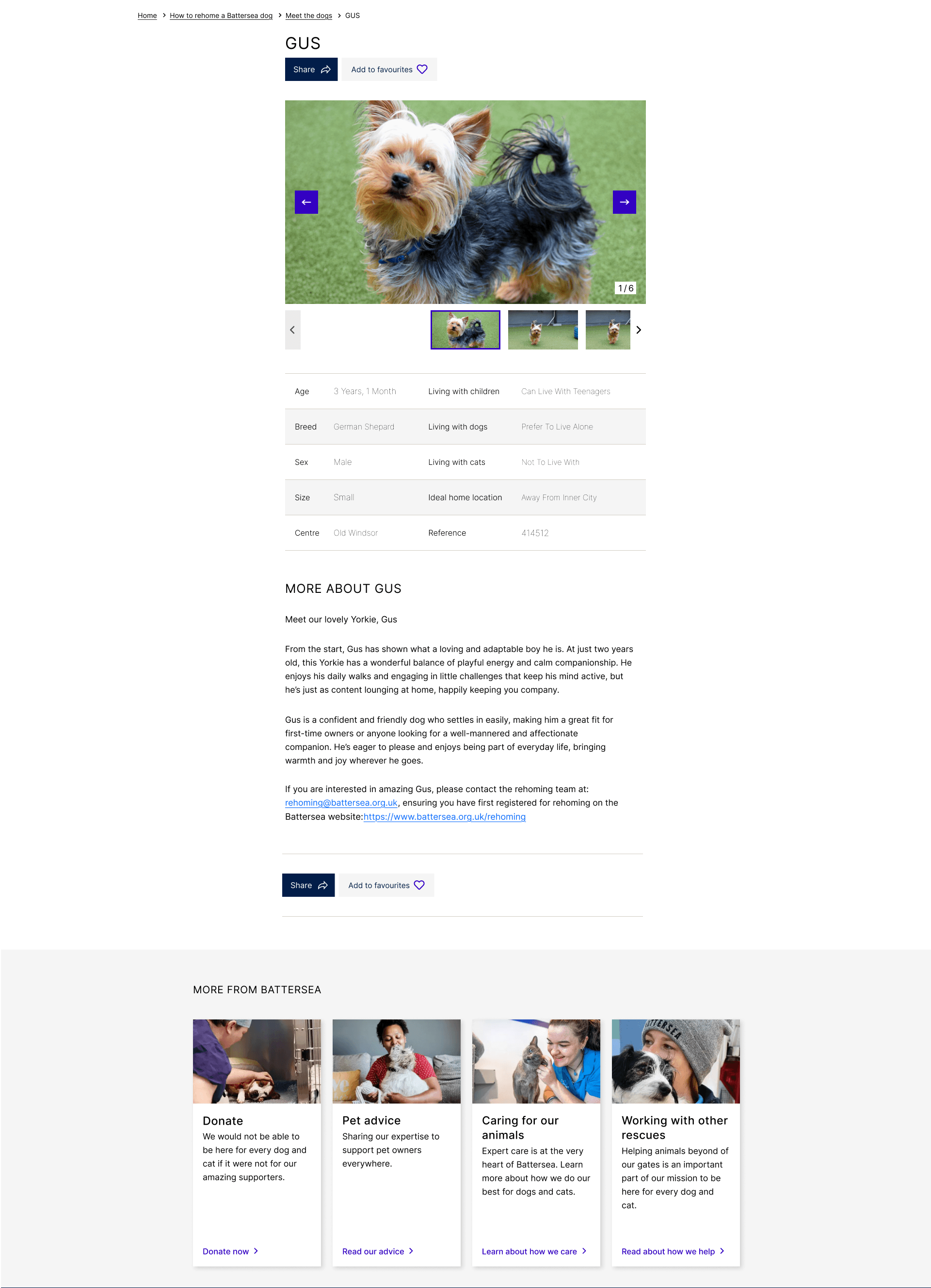
A — Email-only request
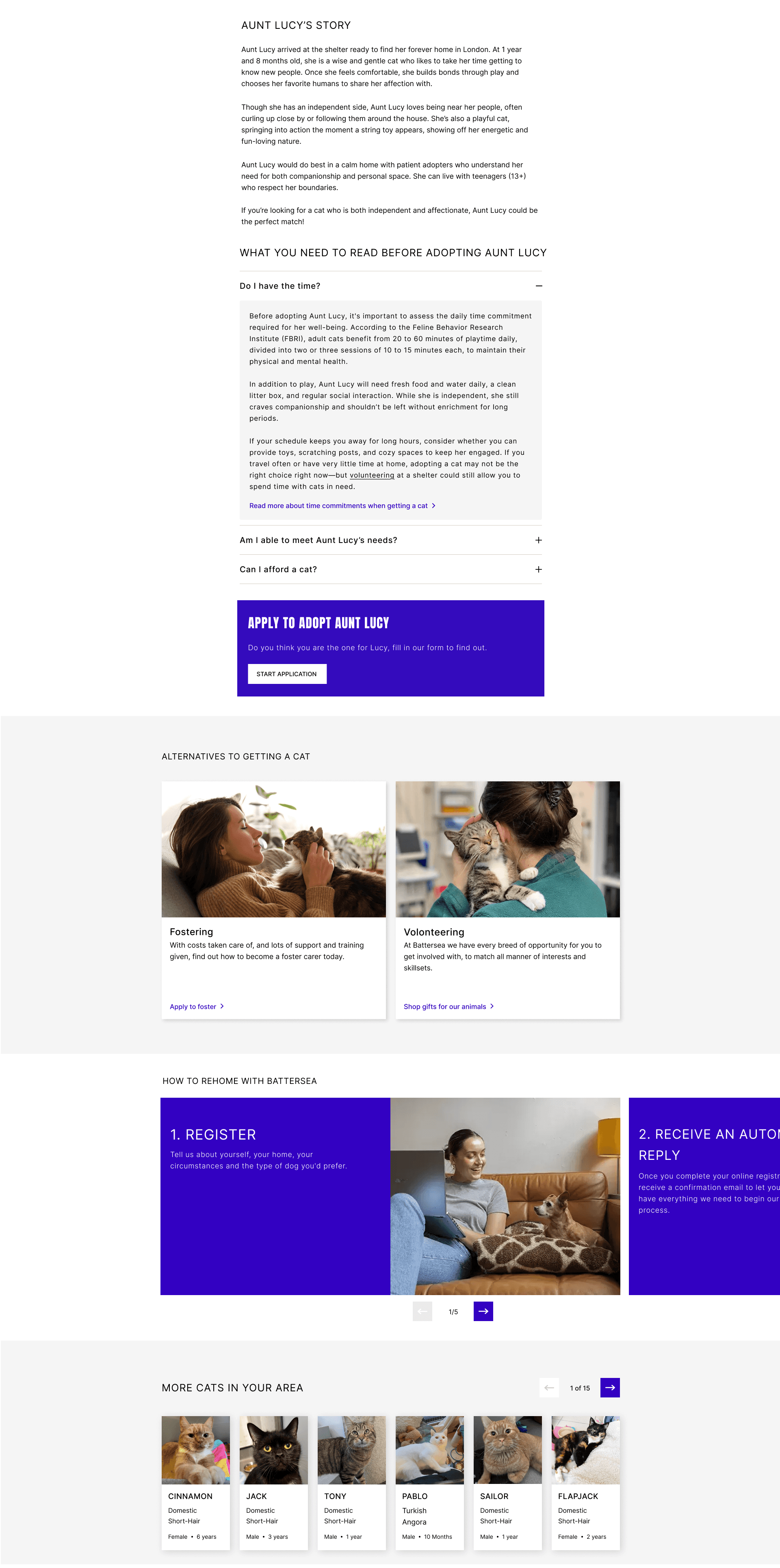
B — Accordion + form
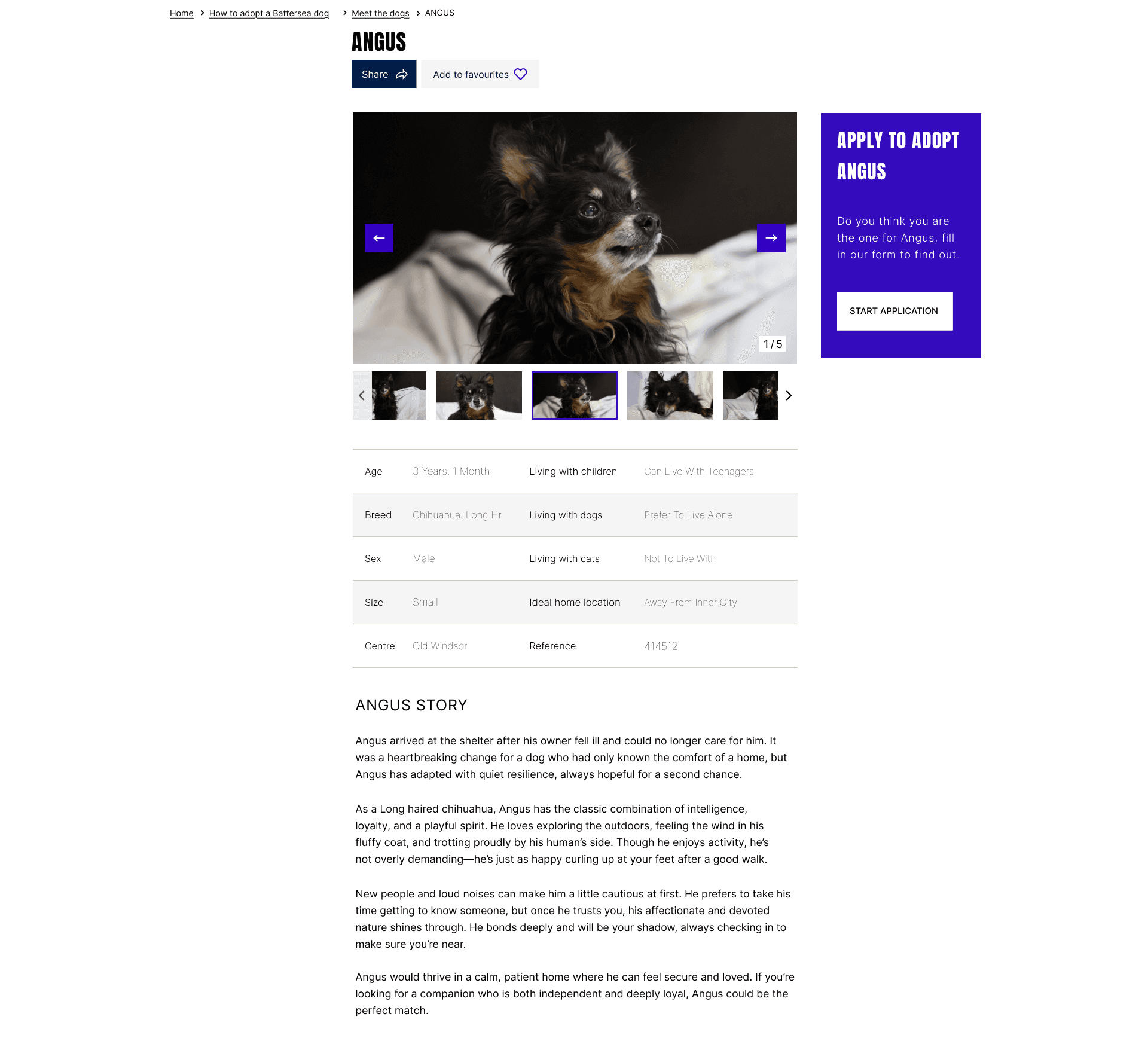
C — Top button, emotive story
(Key Findings)
Low in (A) where finding pets felt hard; moderate in (B) with easier browsing; highest but volatile in (C) — emotional cues helped, the pop-up dampened it.
(A)’s application path felt unclear; (B) made starting and finishing easy; (C) was easy too, but its top “Start application” button was sometimes ignored as an ad.
(B)’s quiz nudge felt smooth; (C)’s early pop-up annoyed users and lowered trust — while a later, post-application prompt matched intent and worked.
(A) felt inconsistent and hard to surface; (B)’s pet backstories and commitments built trust; (C) was informative but the pop-up raised doubts.
(B) gave high autonomy via clear nav, good filters, and flexible entry points; (C) supported it too, briefly disrupted by the intrusive pop-up.
(Key Insights)
Clear info + gentle prompts
Pet-page information accordions made pre-adoption research easy and timely — and users often extended it via linked articles.
Ease = confidence
Filters, obvious entry points, and a straightforward flow increased perceived control and motivation.
Emotion helps, timing matters
“Days in shelter” cues boosted interest, but an early pop-up reduced trust; a post-application prompt worked better.
Visuals spark action
Images reliably triggered attention and clicks, while stories reinforced motivation when paired with transparent commitments.
(Implications for Design)
01
Make research effortless at the right moment
Keep commitment info on the pet page in an easy accordion, so users naturally read before they apply.
02
Lower the barrier to browse and start
Clear entry points, filters, and a short matching quiz gave people more control and confidence.
03
Place calls-to-action with care
Keep the apply action visible but not banner-like — a top button in (C) was sometimes ignored as an ad.
04
Time persuasive triggers to user intent
Avoid intrusive entry pop-ups; use prompts after a meaningful action, when motivation is naturally higher.
05
Use emotion responsibly
Emotional cues can raise interest, but pair them with transparent info to prevent impulsive adoptions.
(Conclusion)
Design B showed the strongest overall balance — its information accordion and supportive flow helped nearly all participants engage with commitment details and make more thoughtful decisions. Design C confirmed emotion can raise interest, but its early pop-up reduced motivation, trust, and autonomy.
The takeaway: persuasion works best when it feels like guidance, not pressure. Clear information, emotional balance, and the right timing proved far more powerful than aggressive triggers.
(What I Learned)
This project taught me how small design choices completely change how users think and feel. I learned to test persuasive elements carefully and pay attention to not just what users do but why — helping them feel confident in their decisions rather than just excited in the moment. Most of all: ethical design can still be persuasive when it respects autonomy and trust.
Next project