04 / UI/UX Case Study
Marketplace · Startup
Sole Designer
Startup Environment
Role
UI/UX Designer
Timeline
12 months
Team
3 Devs · PM · Marketing
Tools
Figma · Miro · Discord
Confidentiality note
Due to a confidentiality agreement I can’t share many of the final designs. This study focuses on the process, wireframes, and insights that shaped the product, while respecting client privacy.
User interviews conducted
Distinct user journeys
Month project timeline
(Overview)
Tasker is a Romanian gig platform connecting people who need help with everyday tasks to those who can provide services — post a task, find qualified help, or offer your own services, all in one seamless experience.
I joined at the startup stage as the sole UI/UX designer and quickly became the go-to person for design decisions — responsible for an experience that would stand out in the Romanian market by prioritizing simplicity, trust, and accessibility.
(The Challenge)
Existing solutions were too complex, didn’t feel secure, or ignored the specific needs of the local market. The platform had to deliver on four things:
✓
Build trust between providers and those seeking help
✓
Simplify finding help for everyday tasks
✓
Create a fair, transparent system for both sides
✓
Work across both urban and rural areas of Romania
(Research & Discovery)
30+ user interviews with task posters and providers
Market research on Eastern Europe’s gig economy
Competitive analysis across Romania and globally
Facebook group analysis of real service requests
Stakeholder interviews to align on business goals
(Key Insights)
01
Trust concerns
Worries about scams, unreliable help, and safety when inviting strangers home.
02
Pricing transparency
Unclear pricing was a major pain point, leading to abandoned transactions.
03
Geographic limits
Most platforms focused on major cities, leaving rural areas underserved.
04
Communication gaps
Users juggled multiple apps to communicate, causing confusion and missed jobs.
— Research participant
(User Personas)

Maria Ionescu
Task Poster · 28 · Bucharest
Motivations
Save time and reduce stress by outsourcing chores. Values verified pros, transparent pricing, and secure payments.
Pain points
• Last-minute cancellations and incomplete tasks
• Hard to verify a provider’s trustworthiness
• Unclear, inconsistent pricing

Andrei Popescu
Service Provider · 32 · Cluj-Napoca
Motivations
Wants steady, well-matched jobs with secure automatic payouts, and a verified profile with strong reviews to stand out.
Pain points
• Unreliable clients who cancel or delay payment
• No integrated invoicing or income tracking
• Limited visibility beyond his city or Facebook
(Defining the Experience)
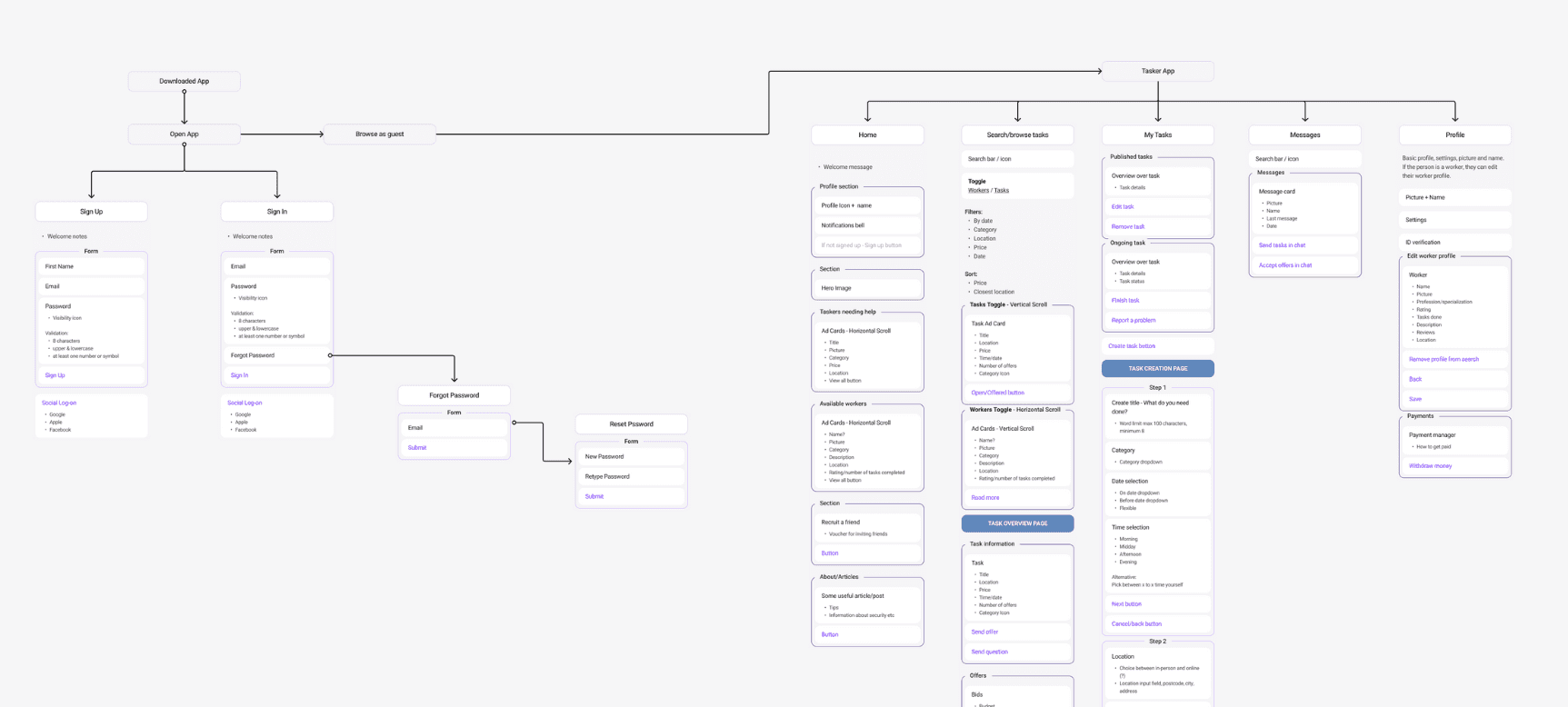
I mapped the core flows and journeys for both posters and providers, sketched wireframes, defined task categories, and explored ways to surface trustworthy users — verified profiles, ratings, and reviews. The experience needed to feel familiar yet thoughtful, reducing any hesitation about using the app.
(Prototyping & Testing)
I built clickable Figma prototypes and ran lean usability sessions. Feedback drove fast, iterative changes — simplifying filters and adding trust badges — that made the app feel noticeably more intuitive and reliable.
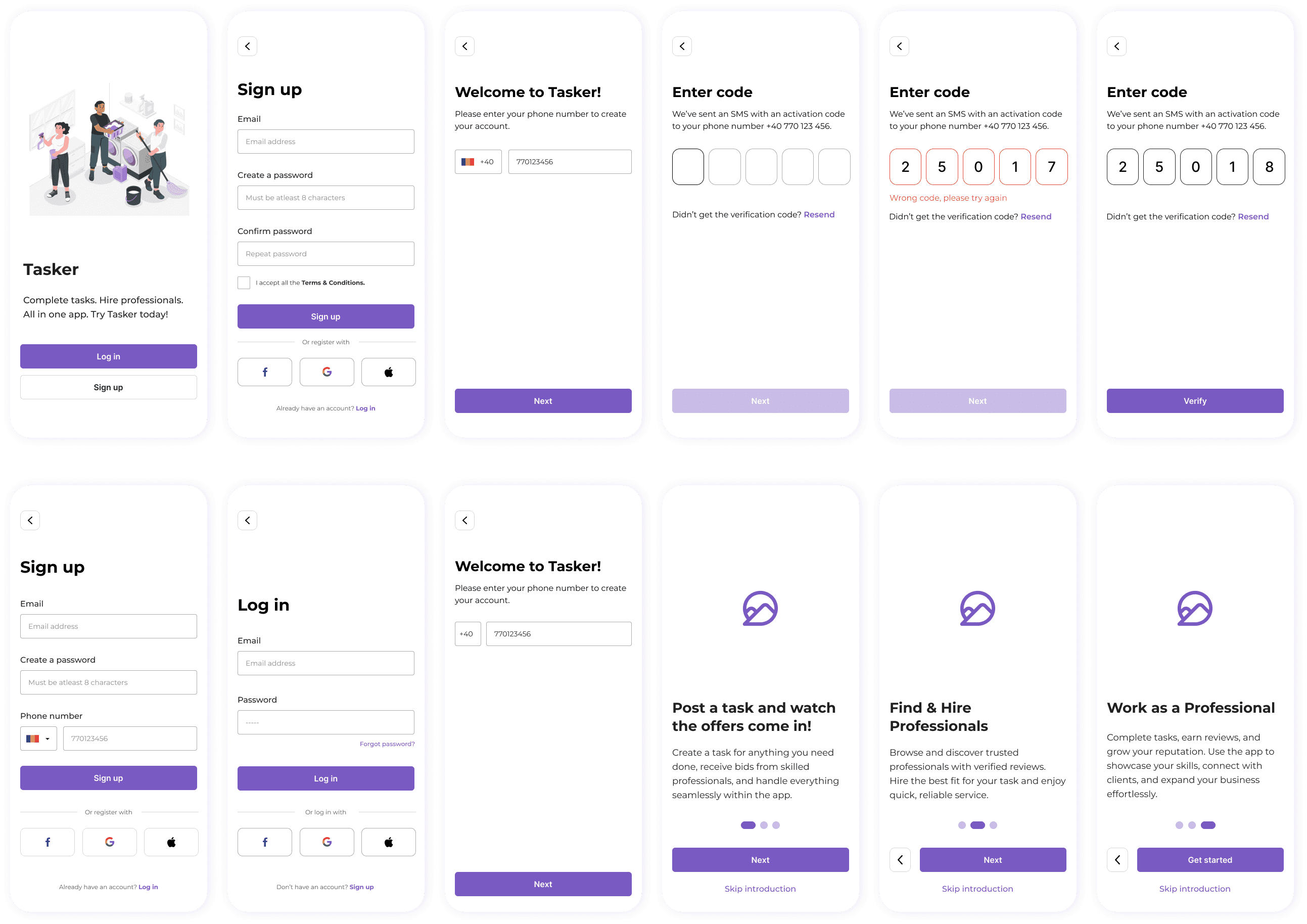
Sign-up and onboarding — several versions of the same flow.
(What I Learned)
Balancing the needs of task posters and service providers pushed me to think carefully about flow, hierarchy, and communication. Even small decisions — how information is presented, how people move through a flow — really affect how confident and comfortable users feel.
My biggest takeaway was the importance of collaboration. Working closely with developers kept designs realistic, marketing syncs kept branding consistent, and founder check-ins kept features prioritized. Staying flexible — translating technical, strategic, and user feedback into clear decisions — grew me as much as a communicator as a designer.
Next project